Is a home listed as “waterfront” really on the water, or does it just look that way in photos? If you are shopping in Harwich, that one word can change your day-to-day lifestyle, your budget, and your long-term maintenance costs. You deserve a clear, local explanation before you fall in love with a view. In this guide, you will learn how “waterfront” and “waterview” are used on Cape Cod, what they mean for access, permits, insurance, and value, and the steps to take before you make an offer. Let’s dive in.
What “waterfront” means on Cape Cod
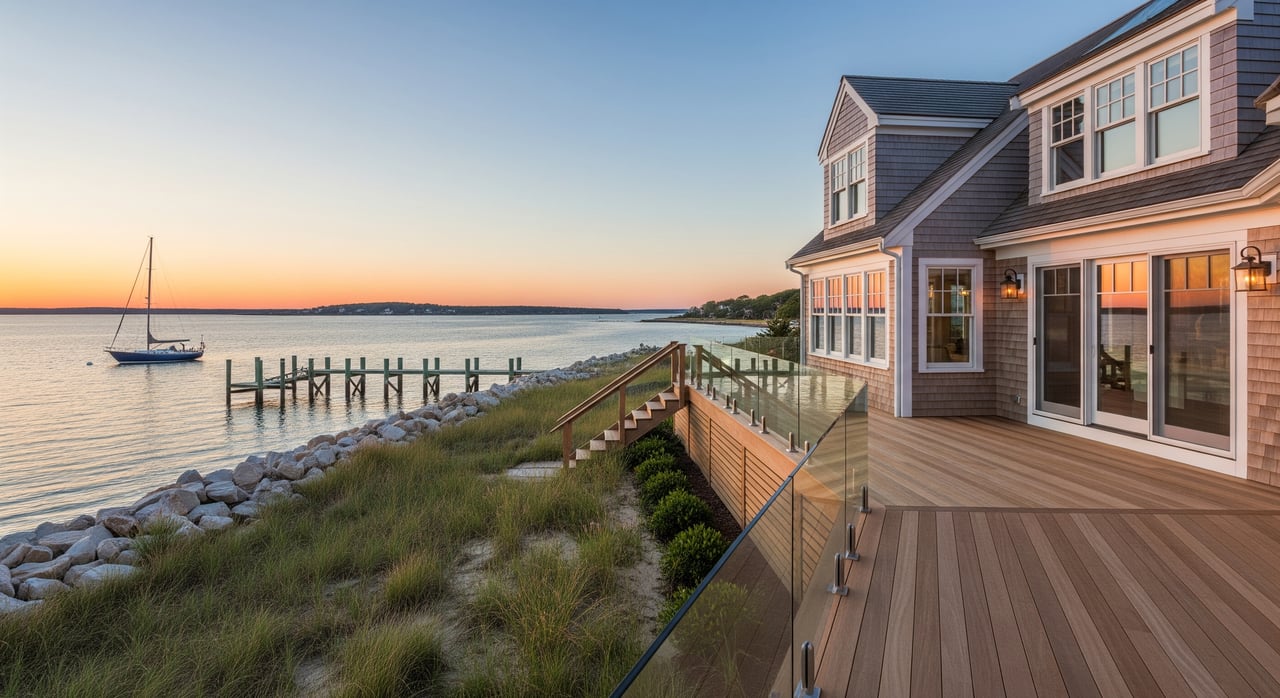
When a Harwich property is described as waterfront, it typically means the lot directly touches a waterbody. The shoreline is part of the property boundary, and you have immediate access from your land to the water. On Cape Cod that can be oceanfront, bayfront, harborfront, pondfront, or riverfront.
Frontage is often measured in linear feet along the water. Where that line sits can depend on the mean high-water or tide line. Even with true waterfront, you still need to verify what you can do at the edge of your land, since much of the foreshore below the high-water mark is subject to public trust uses and state oversight.
What “waterview” means in Harwich
A waterview property offers a view of the water without direct frontage. The view might be unobstructed, partial, across a marsh, or seasonal through trees. It could come from an upper deck, a primary bedroom, or a spot up the street.
You might enjoy gorgeous sunsets and lower maintenance, but you may not have legal access to the shoreline. The quality and permanence of a view also vary by location, height limits, and nearby development. Treat “waterview” as a starting point, then confirm what you can actually see and keep.
Why the label is only the start
Two Harwich listings can use the same term and mean different things in practice. Use these questions to get clarity fast:
- Does the lot have confirmed water frontage on a survey, and where is the mean high-water line?
- Is there legal private access to the water, or is access over a public way or easement?
- Are there existing permits for stairs, a dock, a seawall, or shore work?
- What is the flood zone, and do you have an elevation certificate?
- How permanent is the view based on setbacks, height limits, and nearby ownership?
Rules that shape what you can do
Tidal boundaries and Chapter 91
In Massachusetts, tidelands and the foreshore below mean high water are subject to public trust principles and state regulation. Private work on the shore often requires approval under Chapter 91 and review by MassDEP. Expect additional local review if the property is near a coastal bank, salt marsh, or other resource areas.
Local conservation and buffer zones
The Harwich Conservation Commission enforces the Wetlands Protection Act and local bylaws. There are buffers around sensitive areas that limit where you can build or expand. These rules can affect house placement, additions, decks, septic fields, and any shoreline structures.
Easements and public access
Ownership does not always include private beach or shore access. Deeds may include pedestrian rights for others, or the strip between the lot and the water may be town-owned or a public way. Review the deed for riparian rights, recorded easements, and any reserved rights.
Docks, moorings, seawalls, and bulkheads
Docks and piers often need multiple approvals that can include the town, state, and sometimes the U.S. Army Corps of Engineers. Some older structures may be grandfathered but not freely replaced. Seawalls and bulkheads require permits and ongoing maintenance that you should budget for.
Flood zones and climate risk
FEMA flood designations like AE or VE affect insurance, mortgage requirements, and long-term value. Obtain the current flood zone and an elevation certificate when available so you can estimate costs before you buy. Consider coastal storm surge and erosion history for the specific site.
Septic and wastewater rules
Massachusetts Title 5 and local Board of Health rules govern septic system adequacy. Proximity to sensitive water bodies may trigger more stringent standards or upgrades at sale. In some Cape areas, town-level projects or nutrient-control programs shape long-term costs and desirability.
Zoning and building rights
Local zoning controls setbacks, height, and lot coverage. If you plan to expand, add a second story, or reorient windows and decks for a better view, confirm what is allowed. Understanding buildable area also helps you evaluate the risk that future nearby work could obstruct your view.
How these terms affect price in Harwich
Waterfront parcels in Harwich and across Barnstable County are limited. That scarcity, combined with second-home demand, supports a premium over inland properties. The size of the premium depends on the specific waterbody, frontage, elevation, orientation, and existing improvements.
What drives waterfront value
- Direct, legal access to the shore or a private dock
- The waterbody type and setting (open ocean, harbor, river, or freshwater pond)
- Frontage length and unobstructed exposure
- Higher elevation that reduces storm and flood risk
- Existing permitted infrastructure, such as a dock or stabilized shoreline
What supports waterview value
- A broad, unobstructed view from primary living spaces
- Privacy and orientation that capture light and scenery
- Fewer regulatory and maintenance burdens
- Potential to enhance the view with windows or a lookout deck (subject to permits)
Costs that change the equation
- Flood and homeowners insurance
- Shoreline maintenance and seawall or dock upkeep
- Septic or wastewater upgrades
- Permit timelines and constraints
Common trade-offs to expect
Waterfront buyers often pay more for direct access and exclusivity while taking on higher insurance and maintenance. Waterview buyers typically spend less up front and face fewer permitting hurdles, but they may not have shore rights and could see view changes over time. Local comparable sales are essential for valuation, since national averages are not reliable for Harwich micro-markets.
Due diligence checklist for Harwich buyers
Use this list to compare properties with confidence:
- Documentation and title
- Request a recent survey showing lot lines, shoreline, and structures.
- Review the deed for easements, riparian rights, and restrictions.
- Search the Barnstable County Registry of Deeds for encumbrances.
- Permits and compliance
- Ask for permits related to docks, seawalls, additions, or shore work.
- Confirm status with Harwich Conservation Commission, Board of Health, and Building/Zoning.
- Verify Title 5 compliance and any local septic or sewer plans.
- Access and practical use
- Confirm legal private access to the water, or whether access is over a public way or easement.
- If a dock or mooring is central to your plans, verify permitted use and any town regulations or waitlists.
- Flood, erosion, and climate risk
- Obtain FEMA flood zone and, if applicable, an elevation certificate.
- Ask about erosion history and any stabilization efforts.
- Consider sea-level rise and storm-surge exposure for the location.
- Insurance and operating costs
- Get flood and homeowners insurance estimates before your offer.
- Budget for dock, seawall, and shoreline maintenance if applicable.
- View permanence and development risk
- Review neighboring ownership and known plans.
- Check height and setback limits that may affect future view corridors.
- Look for conservation restrictions or scenic easements that may protect views.
- Environmental issues
- For ponds and estuaries, review water-quality reports and any advisories.
- Professionals to engage
- Surveyor to confirm boundaries and frontage.
- Coastal engineer to assess erosion risk and shore structures.
- Marine or harbor consultant if dock or mooring use is a priority.
- A buyer’s agent with Harwich coastal experience.
Local resources to contact
- Town of Harwich: Conservation Commission, Board of Health, Building and Zoning
- Barnstable County Registry of Deeds
- Cape Cod Commission
- Massachusetts Department of Environmental Protection (Chapter 91 and coastal oversight)
- FEMA Flood Map Service Center
- U.S. Army Corps of Engineers (for certain docks and piers)
- Local MLS and Cape Cod and Islands REALTOR associations
- Experienced coastal brokers and appraisers familiar with Harwich neighborhoods
Which lifestyle fits you?
Choose waterfront if direct access is central to your lifestyle. If you plan to launch a kayak from your yard, keep a boat at a permitted dock, or host gatherings on the shoreline, this access can be worth the premium and extra care.
Choose waterview if the view and lower maintenance matter most. You can enjoy sweeping scenery, fewer regulatory hurdles, and likely lower operating costs, while using nearby public access points for water activities.
In either case, the winning choice balances your budget, desired daily use of the water, and comfort with permitting and upkeep. A clear plan for how you will live in the home is your best guide.
Next steps
If you are comparing properties in Harwich or across Barnstable County, a focused review of surveys, permits, flood data, and comps will help you avoid surprises. For a tailored look at addresses you are considering, including value drivers, regulatory pathways, and insurance implications, connect with a local advisor who handles coastal transactions every day.
Request a Private Market Consultation with Christie’s International Real Estate Atlantic Brokerage to review your shortlist, confirm access and view permanence, and map a clear path to the Cape Cod lifestyle you want.
FAQs
What is the difference between waterfront and waterview on Cape Cod?
- Waterfront means the lot directly touches a waterbody and offers immediate access, while waterview means you can see the water without guaranteed frontage or legal shore access.
How do FEMA flood zones affect a Harwich waterfront purchase?
- Zones like AE or VE can require flood insurance and may influence loan terms and long-term costs, so you should obtain zone data and an elevation certificate early.
Do Harwich waterfront homes always include private beach rights?
- No. Deed language and local conditions control access, and some shore areas involve public trust uses or town-owned strips, so verify rights in writing.
Can I build a dock on a Harwich waterfront property?
- Only if permitted by local and state authorities, and sometimes federal review; feasibility depends on site conditions, resource areas, and regulatory approvals.
Will my waterview be protected from future construction in Harwich?
- Not automatically. You need to check neighboring ownership, zoning setbacks, height limits, and any conservation or scenic restrictions that preserve view corridors.
What documents should I request before buying a Harwich water-oriented home?
- Ask for a current survey, deed, permit history for shore work, Title 5 compliance, flood zone and elevation data, and any records related to docks, seawalls, or moorings.