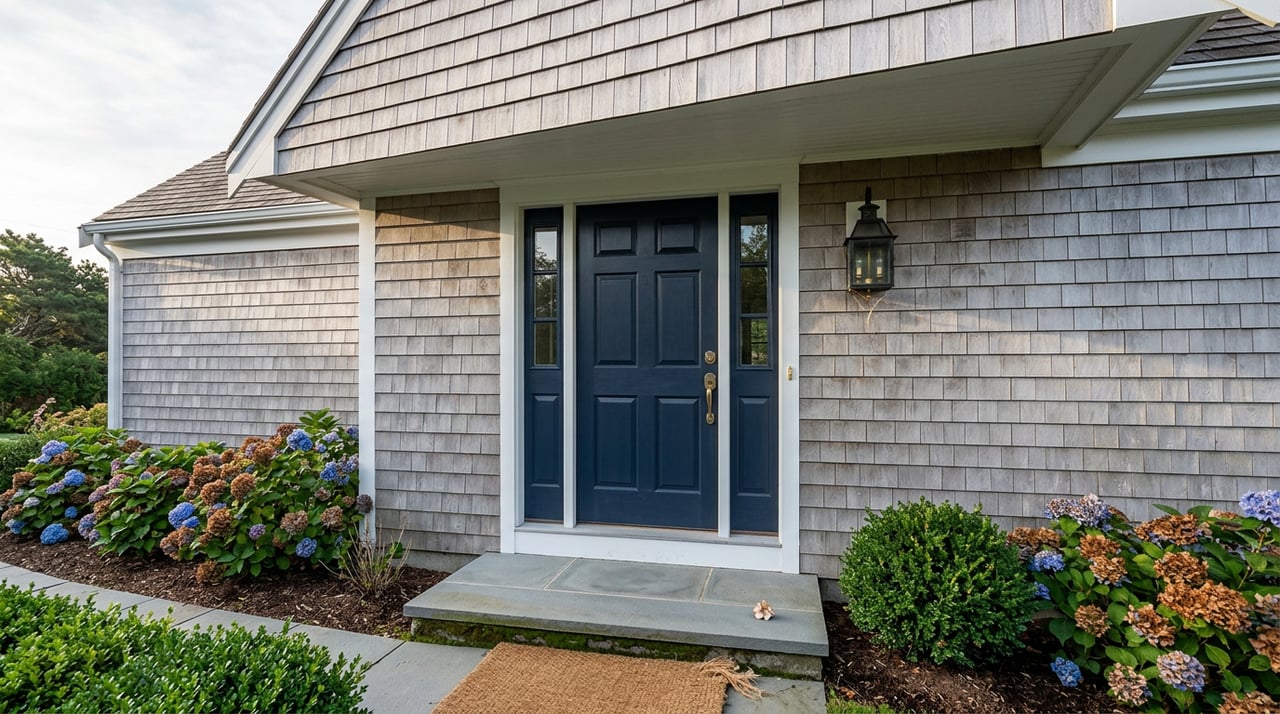
A buyer we spoke with recently had done her homework. The Commercial Street cottage she wanted came with three seasons of rental statements, a five-star review history, and a listing sheet that treated the short-term rental income as a permanent feature of the property, the way a renovated kitchen or a water view would be. She assumed the certificate that let the current owner rent it by the week would simply carry over at closing.
It does not. Under Provincetown's short-term rental bylaw, a Certificate of Registration is issued to a person, tied to that person's compliance history and unit count, and it does not travel with the deed. The town's own bylaw language is specific about when a grandfathered certificate ends: an existing holder may keep operating under it "until the dwelling unit is transferred or conveyed, or the certificate of registration is not renewed." The only exception is a property passed down through a will. A sale is not an exception. A sale is the trigger.
The Sentence Every Buyer Skips
That single clause reframes how an investment buyer should think about a Provincetown listing. The certificate is closer to a personal license than a property fixture, more like a fishing permit than a deeded easement. If you buy a property currently operating as a short-term rental, you are not inheriting the seller's registration. You are starting your own application, under whatever rules are in effect on your closing date, evaluated against your own household's existing rental count.
That distinction matters because Provincetown's rules, adopted at a special town meeting in October 2023, cap any one owner at two short-term rental certificates and prohibit certification of units held in a corporation's name. If you already hold a certificate elsewhere in town, or if you plan to close in an LLC for liability or estate reasons, the two-unit cap and the ban on corporate ownership can stand between you and the rental income the listing sheet promised. Accessory dwelling units, deed-restricted affordable units, and timeshares are excluded from short-term rental use entirely, regardless of who owns them.
One Year, Not a Fixture
Provincetown treats short-term and long-term rentals differently, and the gap between them tells you how the town wants owners to think about the two. A Long-Term Rental Certificate, for a unit rented year-round or seasonally under a lease of 31 days or more, is valid for three years. A short-term rental certificate, the kind covering nightly and weekly bookings, is valid for one year and must be renewed annually with a $750 per-unit fee and a Board of Health inspection.
| Long-Term Rental Certificate | Short-Term Rental Certificate | |
|---|---|---|
| Rental term covered | 31+ consecutive days | 31 consecutive days or fewer |
| Certificate validity | 3 years | 1 year, renewed annually |
| Fee | Set by application | $750 per unit, per year |
| Survives a sale | Not automatic | Not automatic, ends at conveyance except by bequest |
| Enforcement body | Board of Health | Board of Health, civil penalty up to $5,000 per day of violation |
The shorter term is not an accident of paperwork. It gives the town an annual checkpoint to confirm the unit still meets safety and occupancy rules, and it gives a change in ownership a natural place to reset the clock rather than let a permission quietly outlive the person it was granted to.
The Math Nobody Priced In
Before Provincetown tightened its rules, the gap between paper and practice was wide enough to matter. In the spring of 2023, months before the cap and corporate ownership ban were adopted at that October's special town meeting, the assistant town manager told residents the town had just over 700 valid short-term rental certificates on the books. Data pulled from Granicus, the civic software platform Provincetown uses to track registrations, suggested the real number of units being rented out during peak summer season topped 1,400.
Read plainly, roughly half of the short-term rental activity happening in town at that point was not backed by a valid certificate. The bylaw adopted that fall was built to close that gap, and the town has spent the years since working through the list of unregistered operators. But the underlying lesson for a buyer has not changed: a rental history on a spreadsheet is not proof of a valid, transferable registration, because in Provincetown no registration is transferable in the first place. The only number that matters at closing is whether the specific unit you are buying currently holds a certificate in good standing, and whether you personally will qualify to hold a new one.
What to Ask Before You Write the Offer
A buyer weighing a Provincetown property against its rental income should get answers to these questions before, not after, going under contract.
- Does the current certificate belong to the owner of record, or to a property manager or agent operating on the owner's behalf.
- How many short-term rental certificates does the seller already hold across other properties in town, and would that history affect your own application.
- Will you be taking title as an individual, or through a trust, LLC, or other entity that the corporate ownership ban would touch.
- Has the unit passed its most recent Board of Health inspection, and when does the current certificate expire relative to your anticipated closing date.
- If the property includes an accessory dwelling unit, is that unit being marketed as rental income anywhere in the listing materials, since ADUs cannot hold a short-term rental certificate at all.
None of these questions are exotic. They are the same category of due diligence a buyer would run on a septic system or a title search. The difference is that most out-of-area buyers, and more than a few local ones, do not know to ask, because the assumption that a rental permit transfers with a house is reasonable everywhere except here.
Why This Framework Isn't Going Away
Provincetown was not reacting to a fad when it wrote this bylaw. It was the first Outer Cape town to formalize a per-owner cap and a corporate ownership ban, and the towns around it have since built their own versions of the same idea. Truro and Eastham adopted similar two-per-owner caps at their 2024 town meetings. Wellfleet passed its first short-term rental bylaw at its May 2026 town meeting, setting a slightly looser cap of three units per owner after an amendment from Mike DeVasto raised the occupancy allowance to two people per bedroom plus two additional guests. Wellfleet's housing coordinator framed that town's motivation differently, tying it to a state building code mandate for annual inspections rather than to housing pressure directly, but the mechanism she landed on mirrors Provincetown's from three years earlier.
Provincetown's own rules have not loosened in the meantime. As of this summer, the town's short-term rental enforcement remains the most active anywhere on the Cape, with routine audits of unregistered listings and a total occupancy tax burden of roughly 14.45 percent between the state rate, the local option, and the Cape and Islands Water Protection Fund. Notably, Provincetown has chosen not to add the extra 3 percent community impact fee that some Massachusetts towns now charge on non-owner-occupied units, which keeps the total tax load on guests lower here than it could be, even as the ownership rules stay strict.
For a buyer, the takeaway is not that short-term rental income in Provincetown is unreliable. It is that the income is conditional on a permission you have to earn fresh, on terms the town reviews every year, and that no purchase agreement can hand you in advance.
Frequently Asked Questions
Can a seller guarantee that their short-term rental certificate will transfer to me at closing? No. Provincetown's bylaw allows certificates to continue only "until the dwelling unit is transferred or conveyed," with the sole exception being a property passed to an heir through a will. A sale ends the existing certificate regardless of what the purchase agreement says.
If I already own one short-term rental in Provincetown, can I buy a second? The bylaw caps any one owner at two certificates. A second property is possible, but a third is not, and the town evaluates that count at the individual level, not the property level.
Does buying through an LLC change anything? It can work against you. Provincetown's bylaw prohibits certification of units owned by a corporation, so buyers planning to hold title through certain business entities should confirm with the town how their specific structure will be treated before assuming rental income in their offer.
Is Provincetown's rule unusual for the Outer Cape? It was the first, but not the last. Truro and Eastham adopted comparable caps in 2024, and Wellfleet followed with its own short-term rental bylaw in May 2026, though Wellfleet's per-owner cap is slightly more permissive at three units.
If you are weighing a Provincetown property against the rental income it might generate, the certificate question belongs in your offer strategy, not your closing week surprises. Atlantic Brokerage works these details into every conversation with investment buyers on the Outer Cape. Request a Private Market Consultation to walk through a specific property's registration history before you write an offer.